How to read this. Happy Wheels does not publish numeric character stats. Anything you see online that rates a character “Speed 7/10, Durability 4/10” is invented. This ranking uses only documented abilities and the character’s general handling, and it shows its reasoning so you can disagree with it properly.
The criteria
Three questions, in order:
- How many level types does this character work in? Versatility beats specialisation.
- How forgiving is a mistake? A character you can recover with is worth more than one that dies on contact.
- How much does it depend on the level being built for it? Specialists rank lower because you cannot always choose the level.
The tiers
S — works almost everywhere
Segway Guy. The jump is the single most valuable ability in the game, because almost every level asks you to cross a gap, clear a hazard or reach a platform. Segway Guy is not durable, and a bad landing still ends badly — but he is the character who can attempt the most situations. If you are learning, this is the pick.
A — strong with clear weaknesses
Wheelchair Guy. Directional jet thrust gives the highest skill ceiling in the roster. Rotating the jet with Shift and Ctrl turns the wheelchair into something closer to a controllable projectile. The cost is that the wheelchair tips easily and the character is fragile, so it rewards precision and punishes everything else.
Irresponsible Dad. A stable bicycle plus a second rider you can eject. The bicycle handles well, and the child is a free trap-trigger and counterweight. The weakness is coordination: you are managing two riders, and both can die separately.
Moped Couple. The speed boost is the best pure traversal tool in the game, and speed solves levels that are about distance. But the boost is also how you crash, and the moped is less stable than the bicycle.
Santa Claus. Flying is genuinely powerful and the sleigh carries three people. The catch is that it is built around open, vertical levels, and in a tight corridor the sleigh is a liability.
B — excellent in the right level
Effective Shopper. The motorised cart is stable and has a jump, which is more than it sounds. It is also heavy and low, which makes it awkward on vertical sections. A comfortable, unspectacular pick.
Lawnmower Man. The only character who removes hazards rather than avoiding them. Against levels full of objects and NPCs, nothing else compares. Against levels made of geometry, the mower’s slowness is a real cost.
Irresponsible Mom. Two children and a tandem bike — the same multi-rider logic as Irresponsible Dad, with more bodies to spend and a longer vehicle that fits into fewer places.
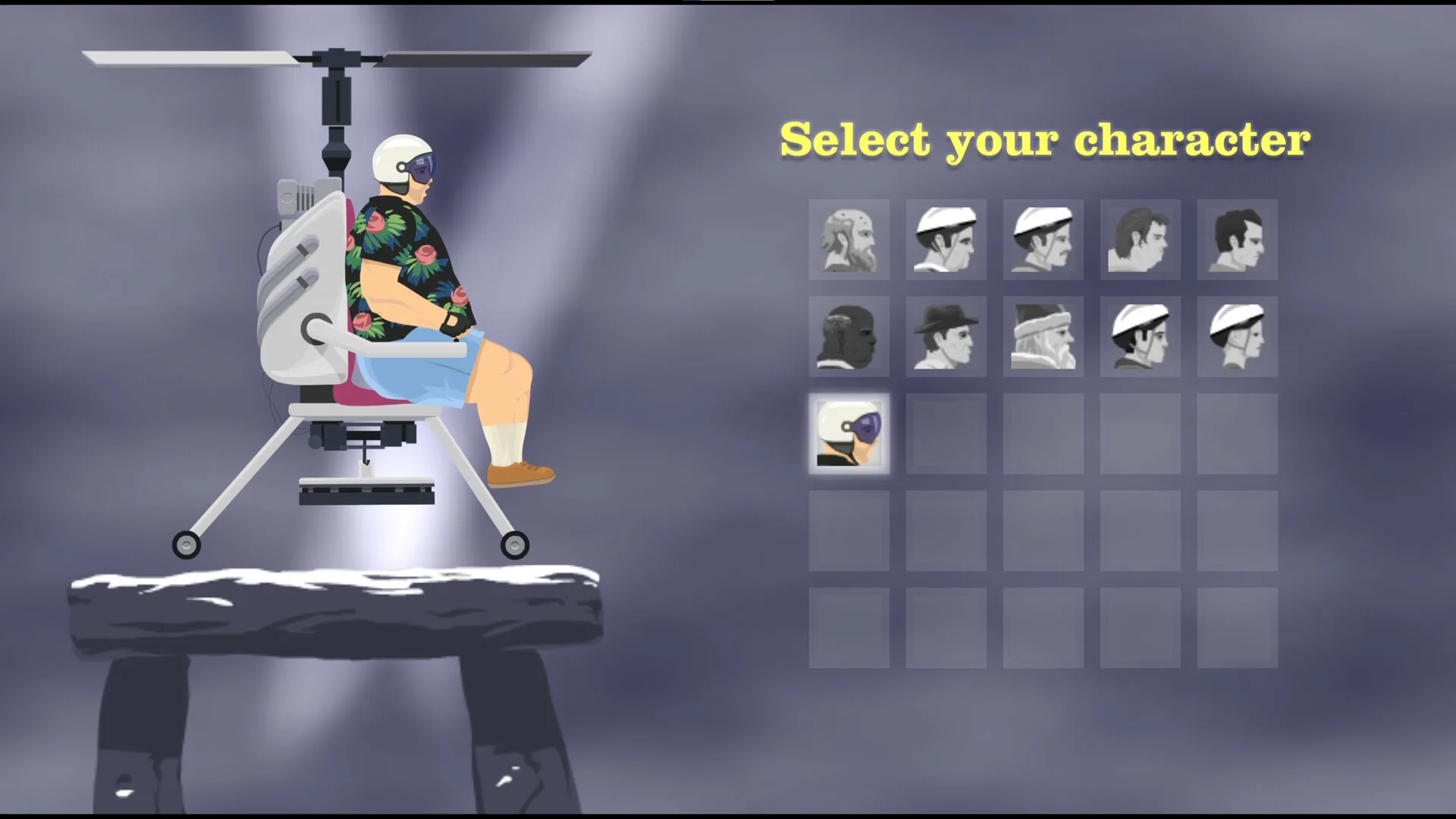
Helicopter Man. The rotor gives vertical movement and the magnet gives unusual interaction. Both are situationally excellent and both are hard to control, which keeps him out of the top tiers for general play.
C — specialised
Explorer Guy. The mine cart is fast on rails and nearly useless off them. When a level has rails, this is the best character in the game. When it does not, he is a heavy cart with poor control.
Pogostick Man. The highest bounce in the roster with a long hang time, which makes dedicated pogo levels a joy and everything else unpredictable. Constant bouncing is not something you can switch off.
If you only read one line
Pick Segway Guy unless the level tells you otherwise. Then pick the specialist the level was obviously designed for.
Why specialists are not “bad”
A C-tier placing here means “narrow”, not “weak”. Explorer Guy on a rail level is not just viable, he is required. The tiers measure how often a character is a good answer, not how high their ceiling is.
A note on the popular-but-thin tier lists elsewhere
Several pages rank these characters and present numeric stats alongside the ranking. There is no source for those numbers, and some of them assign personal names to the characters that appear nowhere in the game or on the wiki. If a tier list gives you a stat table, treat the table as fiction and the ranking as one person’s opinion.
Related reading
- All characters — vehicles and abilities in full.
- How to play — the goal types these characters are being judged against.