Who made it
Jim Bonacci designed, programmed and drew Happy Wheels. He is credited as developer on the Steam release, with Fancy Force as publisher — and Fancy Force is the name the game has been published under since the browser era.
Supporting credits have included additional programming help, and the community wiki lists a composer. The important structural fact for readers is that this was essentially a one-person vision with help, not a studio product.
Where it lives
The browser version is published on TotalJerkFace, Bonacci’s own site, which is also where the official browser release of Happy Wheels still runs. That site is the reason the game survived the end of Flash: a JavaScript remake had already been made.
How it started
Wikipedia records that Bonacci began work on the game in 2006. His own account of the origin is refreshingly accidental:
“I was messing around with it, and eventually created a guy in a wheelchair that would endlessly fall down a random hill. I thought it was funny and stupid, so I kept expanding on it. It was only meant to be a very small game, but eventually it became my main focus.”
The trigger was a Verlet physics engine built for Adobe Flash by a friend and former employer, Alec Cove. The first character — the one that would become Wheelchair Guy — was built in 2006, four years before release.
So the game that became famous for vehicular disaster began as an experiment in making a ragdoll fall down a hill.
Why it is so violent
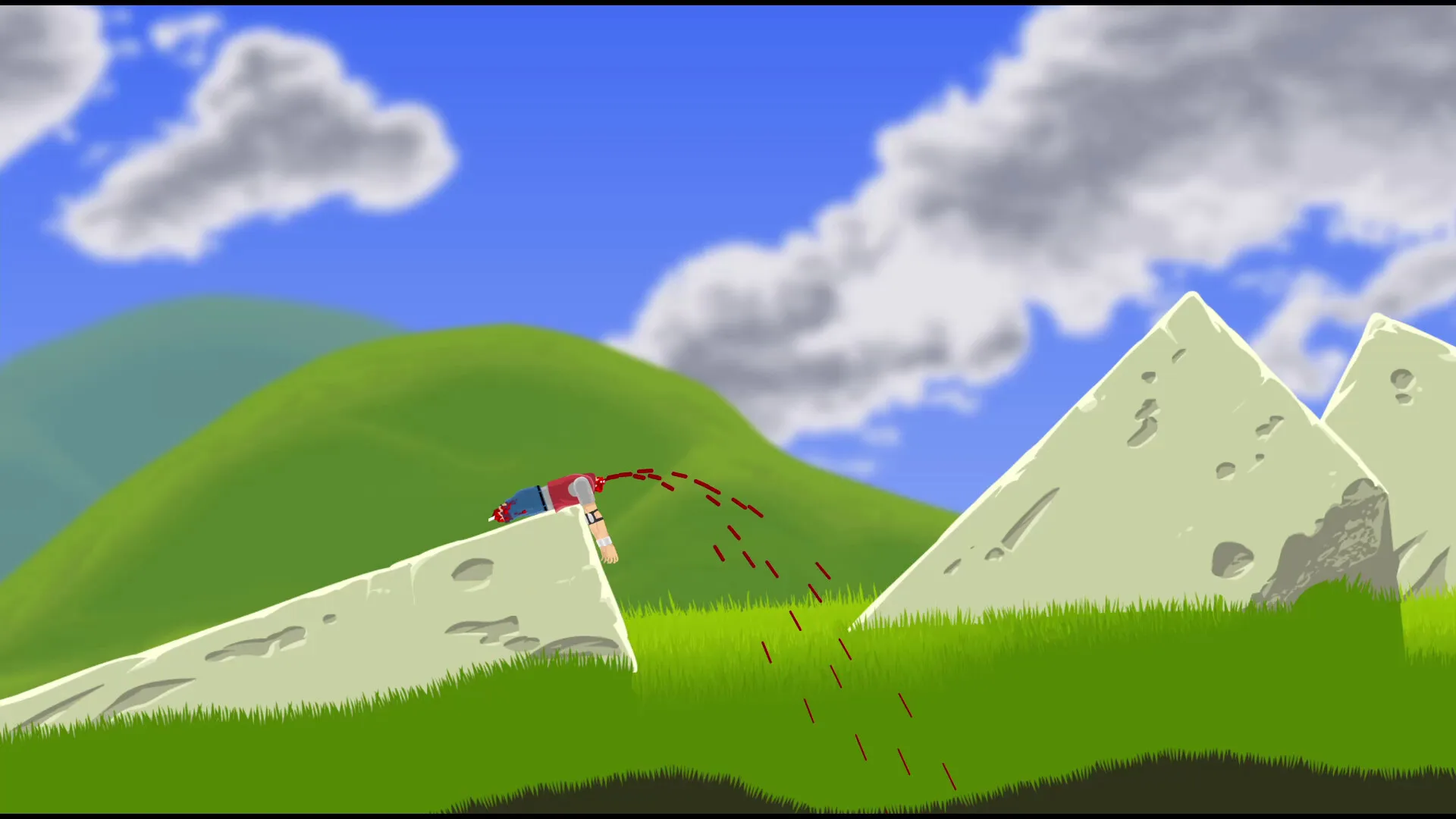
The gore is not incidental, and the developer has explained it as a reaction against other games rather than as a taste for gore.
His stated frustration was that consequences did not feel real: in other games you would fall off a vehicle and bounce around harmlessly, or you would see the same canned animation repeatedly. In his words, half the fun of a game that imitates life is making mistakes and seeing the end result.
There is a second, more practical reason. Because players die constantly, he deliberately put effort into making death itself enjoyable. That is why Happy Wheels deaths are varied, physical and funny rather than being a fade-to-black and a retry button.
The Steam store page’s content description puts the result plainly: “satirical cartoon violence”, with exaggerated cartoon injuries such as dismemberment and bleeding, and no sexual content.
Why it mattered
Three things made Happy Wheels a landmark rather than a curiosity:
- It arrived at the right moment. Released in June 2010, it belonged to the browser-game era that Flash created, and it was one of the earliest browser games to use chaotic ragdoll physics as the main event rather than as a detail.
- It shipped a level editor. The editor is why the game outlived its own launch. The community produced levels continuously for years, and the Steam release ships with access to more than 5 million of them.
- It was extremely watchable. The combination of unstable physics and permanent failure made it ideal for recorded video, and it became a staple of early gaming YouTube. The Steam store page’s tags — Gore, Physics, Sandbox, Dark Humor — describe a game built to be watched as much as played.
The long gap, and the return
Between 2010 and 2026 the game did not stand still, it just did not come to Steam:
| Period | What happened |
|---|---|
| 2010 | Browser release |
| 2015 | iOS release |
| 2020 | Android release, and the JavaScript remake |
| 2021 | Adobe Flash support ends; the remake keeps the browser version alive |
| 2026 | Steam release on 21 September |
The Steam launch surprised almost everyone, including its creator. In the official launch announcement he wrote that he was looking at the wishlist figure “in terror” — around 750,000 people had wishlisted the game, when he had realistically expected “maybe 5k at best”.
Where he is now
The developer’s public updates run through the Steam announcements and the official Discord. Since launch he has committed to continued work on controller support, Steam Deck support, offline play and bug fixes — and the two patches released within a week of launch show that is more than a statement of intent.
Related reading
- Release date and history — every platform and date.
- Is Happy Wheels 2 coming? — the sequel situation, separated from speculation.
- Patch notes — what has changed since the return.